Between Intention and Outcome: Walking the Quadrants with Cecily Wang
A Publishing Journeys Editorial Feature

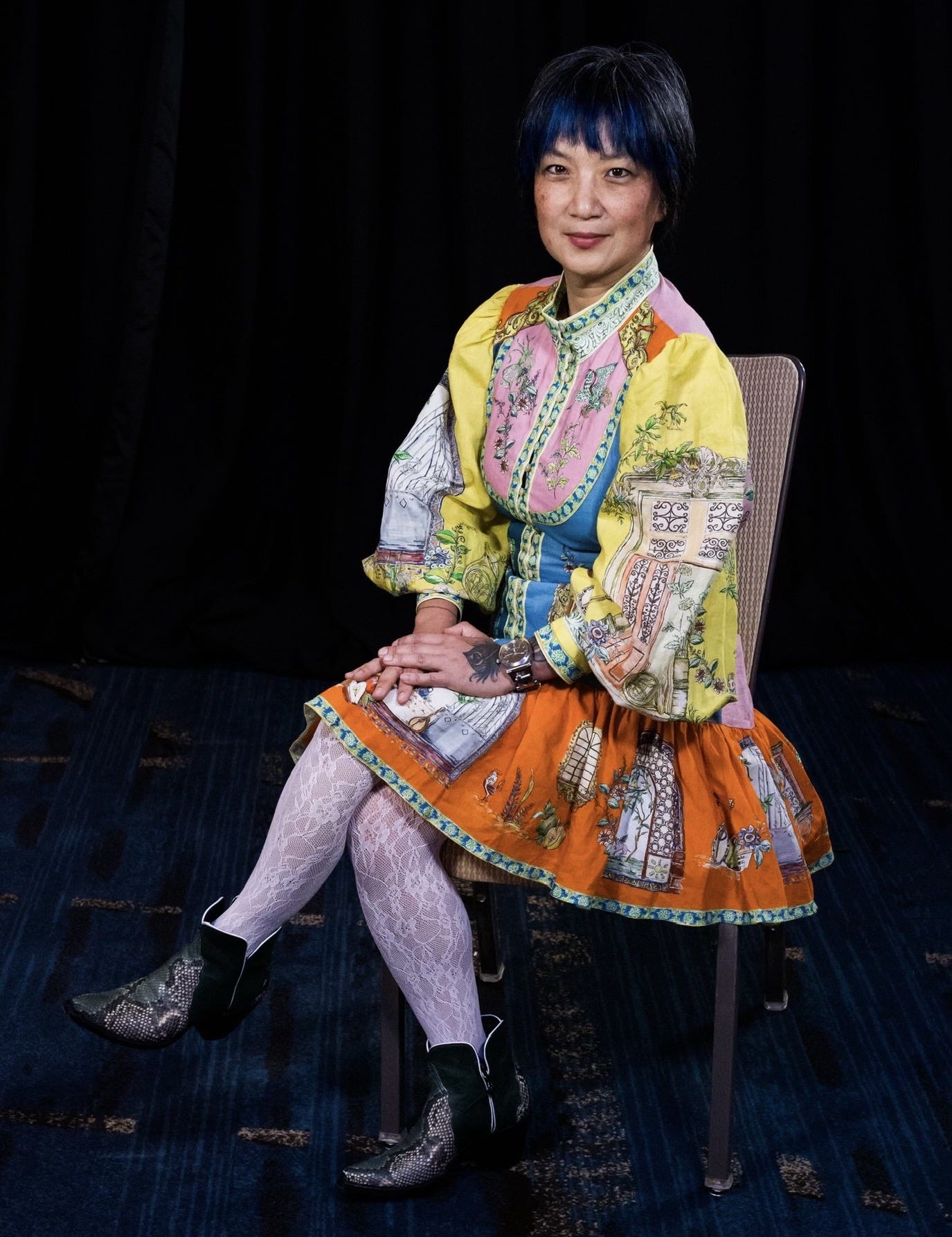
There are some people you meet who do not arrive as a single idea. They arrive as a constellation.
When I first met Cecily Wang, I sensed a multiplicity in her. Not confusion, but complexity. A layered way of seeing the world. She spoke in thoughts that curved and unfolded, sometimes overlapping, sometimes diverging. It was not that she struggled to finish sentences. It was that her mind was already holding several truths at once.
In a world that often demands singularity, Cecily feels like a reminder that we are allowed to be many things at the same time.
An artist.
A writer.
A surgeon.
A witness.
Her work lives at the intersection of observation and experience, shaped by years in trauma surgery and intensive care, and by a deep attentiveness to how people move through the world. Born in Taipei and raised in the United States, she has lived between cultures, systems, and ways of understanding. Her creative voice carries that in-between-ness gently, without asking the reader to resolve it.
Her latest book, Quadrant: A Story of the Mover, the Martyr, the Monster, and the Mirror, is a reflective, allegorical novel that follows Sol as he walks alongside four siblings whose lives follow very different compasses.
One gives too much.
One takes without apology.
One listens.
One speaks in logic that almost makes sense.
Each leaves him with a coin, its shared face marked with a dark quadrant design, its hidden side revealed only in time.
Through sketches, silences, and unexpected turns, Sol begins to see himself more clearly.
On Beginnings
I asked Cecily about the moment this story first came into being.
“It began as an observation,” she shared. “Most people believe they’re doing the right thing, even when intention doesn’t align with outcome. I’m interested in the disconnect between the two—not to explain or resolve it, but to notice it. I wanted to explore this without villains or heroes, and to do so in a way that invites recognition rather than judgment.”
That word—notice—comes up often when Cecily speaks.
She was writing this book while on a medical mission, working alongside people who were deeply thoughtful about how easily well-intended efforts can cause harm. Being in environments shaped by urgency, limited resources, and compressed timelines sharpened her awareness of how complexity often disappears when time is short.
At the same time, she was observing increasing polarization at home.
People living in ideological silos.
Each group convinced of its own goodness.
Each believing they were contributing something positive.
“These parallel observations across cultures, systems, and beliefs helped shape the story,” she said.
On What Stories Can Hold
I asked her what she hopes readers walk away with.
“I hope readers enjoy the book,” she said simply. “And if it leaves them reflective, that matters to me. My hope is that the story creates breathing room… a pause to notice personal patterns and to sit with clearer, more honest questions.”
There is a gentleness in that intention.
Not to instruct.
Not to persuade.
Just to make space.
On Letting the Story Lead
At one point during the writing, Cecily realized the story was asking to be told differently than she had planned.
“I initially tried to build the book around a traditional plot,” she explained. “But after testing several versions, it became clear that structure wasn’t necessary. The story settled once I allowed Sol to walk without an agenda and spend time with the four siblings. The movement across the quadrants became the narrative.”
This feels important.
A story that did not want to be forced into shape.
On Publishing
When I asked her what publishing this book meant to her personally, she spoke about how the quadrant framework is something she uses to reflect on her own life.
“Most of us see ourselves as helping, sacrificing, or at least trying,” she said. “Rarely as causing harm. And yet, to some degree, we all move through those quadrants more often than we realize. Publishing felt like inviting reflection rather than offering resolution.”
That distinction—reflection rather than resolution—feels like the quiet thesis of her work.
On the publishing journey itself, Cecily shared that she learned the book didn’t need to fit a mold.
“Making it longer or heavier didn’t improve it,” she said. “I also learned that publishing is a team process. Working with Gatekeeper Press helped me stay centered on what the book actually was, rather than what I thought it should be.”
When I asked how it felt to finally hold the finished book in her hands, she paused.
“Like an exhale.”
And perhaps that is the truest measure of alignment.
On Partnership
Cecily is a returning Gatekeeper Press author, and she described the relationship not as transactional, but collaborative.
“I appreciate that the relationship feels less transactional and more collaborative. Having an author manager and a team I trust, who understood my voice, made the process both supportive and rewarding.”
On Beginning Again
For writers who feel called to share their story but don’t know where to begin, her advice is simple and rare.
“Write about what you know, whether through fiction or nonfiction. Sometimes fiction allows certain truths to surface more clearly. Aim for honesty rather than polish—you can refine later, but honesty is difficult to add once it’s missing.”
When I asked her to describe her book in one sentence from the heart, she said:
“It’s a story about noticing who you are, who you want to become, and how rarely life fits into clean either-or categories.”
That feels like a quiet mirror, not just for her characters, but for all of us.
When I left our conversation, which had stretched far beyond the thirty minutes we planned, I felt grounded. Reassured. Reminded that this life is everything and nothing at the same time—and that maybe both can be true without contradiction.
Some authors write to explain.
Some write to persuade.
Some write to resolve.
Cecily writes to notice.
And sometimes, that is the most honest thing a story can do.
About the Author
Cecily Wang is an artist, writer, and surgeon based in Hawai‘i. Her work moves along the edges between chaos and calm, shaped by years in trauma surgery and intensive care medicine. Born in Taipei and raised in the United States, she sees both art and medicine as ways of noticing—of holding still long enough to see what matters.
Her books include No Crying in the Operating Room and Quadrant: A Story of the Mover, the Martyr, the Monster, and the Mirror.
Learn more:
https://cecilywang.com
Instagram: @alohasurgeon
This feature was curated and edited by Luis Javier Reyna Mijangos for Gatekeeper Press’s Publishing Journeys series.